Introduction
There is a particular kind of loneliness that has no obvious name. It does not arrive when you are physically alone. It arrives at birthday parties, in classrooms full of laughing kids, at dinner tables surrounded by family. It is the loneliness of operating at a different speed than everyone around you, of carrying expectations so heavy that they quietly separate you from the world without anyone noticing, including you.
I know this loneliness well. Growing up, I was placed under high demands early. The people around me moved at what felt like a slower pace, and no matter how many rooms I entered, I could not find a way to fully connect. I was present, but I was not there. It took me years to understand that what I was experiencing was not a personality flaw or social incompetence. It was a psychological response to a childhood shaped by pressure, performance, and an invisible wall built one expectation at a time.
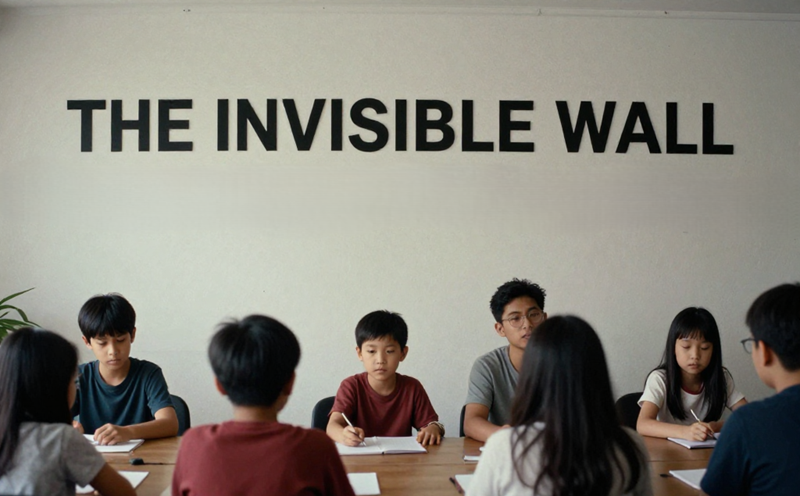
This article is about that wall, who builds it, and what it costs.
Mental health conversations today have expanded significantly. We talk about anxiety, burnout, and depression with more openness than ever before. Yet one experience remains largely unnamed in public discourse, the specific loneliness that emerges when a child is raised under extraordinary pressure to perform, achieve, or carry a weight beyond their years. This is not the loneliness of neglect. It is the loneliness of being seen for what you produce, not for who you are.
Research in developmental psychology and affective neuroscience consistently shows that loneliness is not simply the absence of people. It is the subjective experience of disconnection, a gap between the social connection a person desires and the one they actually feel. You can be surrounded by people and still be profoundly alone. In fact, that invisible gap is often the most painful version of loneliness, because from the outside, everything looks fine.
When Expectations Become Walls
High expectations, in themselves, are not harmful. Research shows that parental involvement and ambition for a child’s future can support academic performance and resilience. However, there is a threshold, and beyond it, expectations stop being motivating and start being isolating.
Studies on children raised under high parental and institutional pressure have found patterns of perfectionism, social withdrawal, and difficulty forming peer connections. When a child is repeatedly measured against standards that their peers are not held to, they begin to perceive themselves as fundamentally different. That difference, over time, does not produce pride. It produces distance.
For many of these children, the world around them seems to move too slowly. Conversations feel surface-level. Friendships feel unequal. There is a constant sense of watching life from slightly outside of it, even when physically in the middle of it. This is not arrogance. It is a form of social dislocation that begins in childhood and, without intervention, travels into adulthood unchanged.
The Paradox of Being Surrounded and Alone
The modern era has made this paradox more visible and more common. Social media creates the appearance of connection while deepening felt isolation. Young people, especially those who grew up performing for external validation, learn to curate presence rather than experience it. They show up to rooms, they execute, they deliver, but they rarely arrive.
The pandemic accelerated this dynamic significantly. Lockdowns removed the physical scaffolding of social life and forced an internal reckoning that many high-performing individuals had been successfully avoiding. Without the structure of performance, many discovered that they had built identities entirely around achievement and had very little underneath. The loneliness that had been managed through busyness became impossible to ignore.
What the science of loneliness makes clear is that this subjective disconnection carries real physiological consequences. Prolonged loneliness is associated with elevated stress hormones, disrupted sleep, and increased risk of depression and anxiety. It is not a soft emotional problem. It is a hard health problem that compounds quietly over the years.
Finding Your Way Back to Connection
The path out of this kind of loneliness is not simply about being around more people. It is about learning to be present in a way that was never fully taught. For children raised under intense pressure, connection was often conditional. You were valued for performance, for outcomes, for potential. Learning that you can be valued for your presence, for your imperfection, for simply existing in a room, requires a fundamental rewiring of what you believe you owe the people around you.
This begins with honesty. Naming the experience, as uncomfortable as it is, disrupts the invisible wall. Therapeutic frameworks centered on person-centered approaches, which prioritize the individual’s internal experience over external metrics, have shown meaningful results in addressing the emotional residue of high-pressure childhoods. So has creative expression. Writing, music, and storytelling have long served as bridges between internal isolation and external connection, offering a language for experiences that otherwise have no words.
The next generation of mental health care must take seriously the specific wounds of high achieving children. Not because they have it worse than others, but because their pain is often invisible, masked by success and mistaken for strength.
Conclusion
The loneliness I carried growing up did not disappear when I became more successful. It followed me into every room I entered, every circle I joined, every milestone I reached. What changed was not the world around me. What changed was my willingness to name it, to stop performing connection and start seeking it.
If you recognize yourself in these words, know that the wall is not permanent. It was built by circumstances you did not choose, but it can be dismantled by choices you make now. The first one is simple, stop waiting to feel worthy of connection before you pursue it. The worthiness was always already there. It just got buried under expectations that were never yours to carry alone.
Mental health is not the absence of struggle. It is the courage to be known, even when being known feels like the most dangerous thing in the world.
I chose to write about this topic because it is personal to me. Growing up, high expectations were placed on me from an early age, and without anyone intending harm, those expectations built a wall between me and the world. I found myself feeling profoundly alone in rooms full of people, operating at a pace that made genuine connection feel just out of reach. Writing became the one space where I did not have to perform. It was where I could actually exist. This article is, in part, an attempt to give language to something I lived without the words for. I believe the intersection of performance culture and mental health is one of the most underaddressed conversations of our generation, and I want to contribute to it with honesty rather than theory.
References
Killgore, W. D. S., Cloonan, S. A., Taylor, E. C., and Dailey, N. S. (2020). Loneliness, a signature mental health concern in the era of COVID 19. Psychiatry Research, 290, 113117. https://doi.org/10.1016/j.psychres.2020.113117
Lim, M. H., Eres, R., and Vasan, S. (2020). Understanding loneliness in the twenty first century, an update on correlates, risk factors, and potential solutions. Social Psychiatry and Psychiatric Epidemiology, 55(7), 793-810. https://doi.org/10.1007/s00127-020-01889-7
Qualter, P., Brown, S. L., Munn, P., and Rotenberg, K. J. (2010). Childhood loneliness as a predictor of adolescent depressive symptoms, an 8 year longitudinal study. European Child and Adolescent Psychiatry, 19(6), 493 to 501. https://doi.org/10.1007/s00787-009-0059-y
Supke, M., Hahlweg, K., Job, A. K. et al. (2025). Long term patterns and risk factors of loneliness in young adults from an 18-Year longitudinal study in Germany. Sci Rep, 15, 24025. https://doi.org/10.1038/s41598-025-08842-1
Spithoven, A.W.M., Vanhalst, J., Lodder, G. et al. (2017). Parent-adolescent discrepancies regarding adolescents’ peer-related loneliness: Associations with adolescent adjustment. Journal of Youth Adolescence, 46, 1104–1116. https://doi.org/10.1007/s10964-017-0662-z
Author Bio
Jesús Cadena is a business entrepreneur, founder & CEO of Grupo Meridia, a technology import and distribution company based in Bogotá, Colombia. Driven by a lifelong interest in human behavior and storytelling, he writes about the psychological dimensions of ambition, identity, and modern life. His work sits at the intersection of business thinking and personal narrative, exploring what high performance costs and what it quietly leaves behind.
Published under the Creative Commons Attribution 4.0 International (CC BY 4.0) license for mental health awareness with editorial review.